
In part two, we clarified AI’s strengths and its hard limits. Now we move into the heart of the innovation process: interpretation. This section shows why data alone can mislead, how human judgment uncovers meaning, and how organizations turn those insights into breakthrough experiences.
Why Interpretation Matters
If meaning is uniquely human, then so is the ability to interpret what people truly need and aspire to. This is where many organizations falter. They over-index on data, surveys, dashboards, behavioral metrics, and now AI-driven sentiment tools, assuming the “what” automatically explains the “why.”
And this is exactly where AI hits its limit.
AI is built on data, and data can mislead when organizations mistake description for meaning. Data describes behavior; it rarely explains it. It reveals patterns, but not purpose. It captures what people say or do in a specific moment, but not what they hope for, fear, or value. And AI, for all its computational power, amplifies this limitation. AI can classify emotions, summarize inputs, and cluster signals at scale, but it cannot interpret the underlying motivations, tensions, or meaning behind them. Humans can.
Interpretation, connecting motivations, context, tensions, and aspirations, is a distinctly human capability. It draws on abstraction, empathy, intuition, and imagination. These are the skills that turn observations into insights and insights into innovation.
At Ziba, we’ve learned that innovation rarely begins with what people say, but with what their behavior and motivations reveal. Watching shoppers struggle with smoke detectors uncovered emotional friction no focus group or reported data could surface. The breakthrough came from interpretation, not inquiry.
That’s why reacting to stated preferences or reported feedback can derail innovation. Real breakthroughs come from uncovering the underlying values people often cannot articulate themselves, long before data points to them. And that requires human judgment and critical thinking.
This distinction becomes clear in practice. The following examples illustrate how humaninterpretation, not AI-driven efficiency, led to breakthrough experiences, while AI played a supporting role in execution.
Proof in Practice

Alaska Airlines – Designing Trust in the Sky
When Alaska Airlines set out to reinvent the travel experience, they didn’t start with a survey. They looked deeper—at the anxieties and hopes that define travel. What travelers wanted wasn’t more features—it was trust: confidence they were supported at every step.
Ziba helped Alaska create a Support Hub and Flight Curation experience that reduced stress and built reassurance, even as AI quietly optimized logistics. The innovation wasn’t the AI itself. It was the meaning: “We’ve got you.”
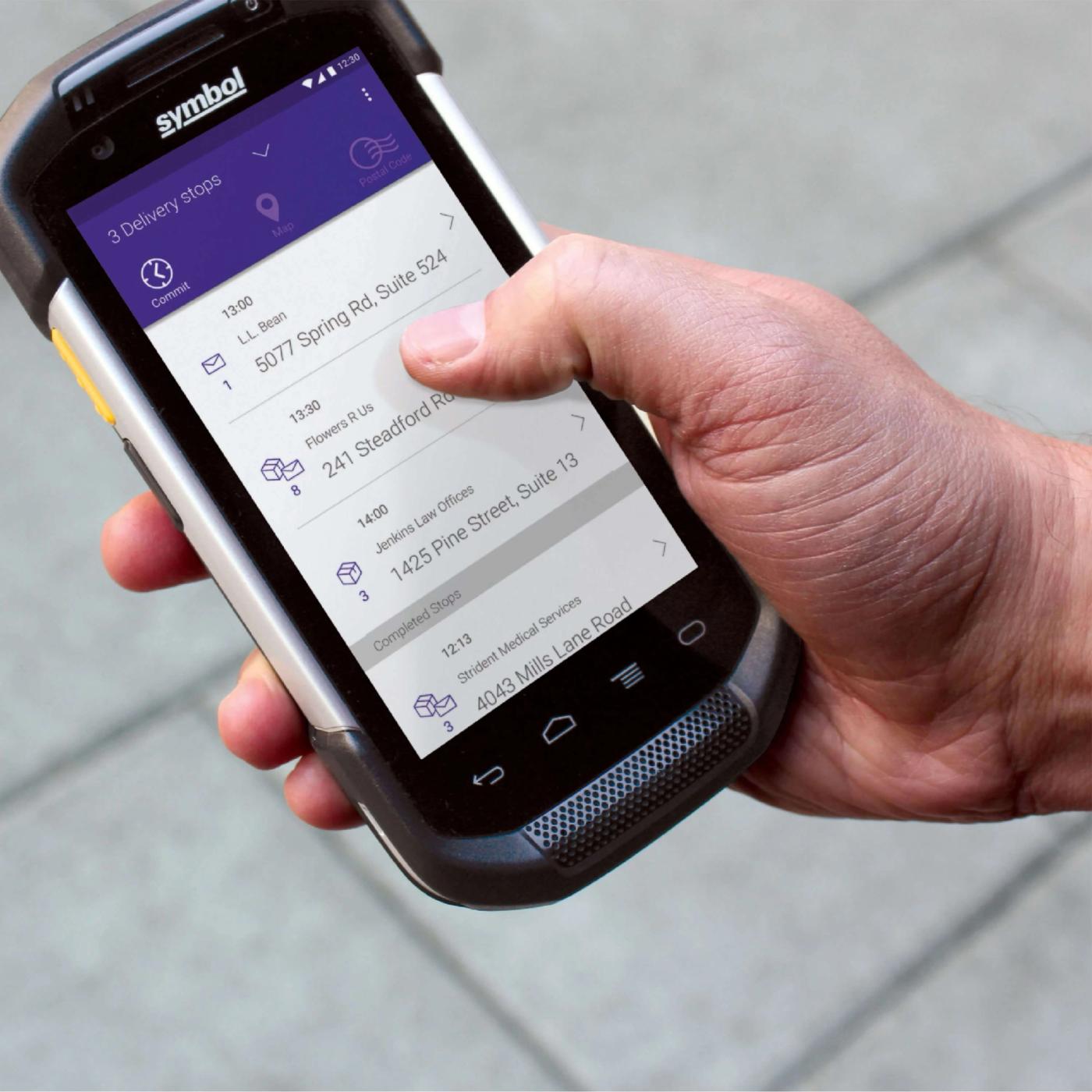
FedEx – Active Connections
FedEx already had cutting-edge technology. But in logistics, speed is a commodity. What matters is connection.
Ziba worked with FedEx to design Connected Care, reframing delivery not as a transaction but as a relationship. AI enabled predictive routing and personalization, but the innovation was human: strengthening trust and loyalty.

Clorox ReadyMop – When Tech Alone Fails
Before Swiffer, companies tried disposable mopping systems. The tech worked, but adoption flopped. Why? No meaning.
Clorox ReadyMop succeeded because it connected with deeper drivers: pride, empowerment, and control in everyday routines. The innovation wasn’t the disposable pad—it was the story and meaning wrapped around it.
The Human-Centered AI Approach
At Ziba, we practice the Human-Centered AI Approach, built on three principles:

Humans generate human-centered ideas
Rooted in empathy, imagination, and foresight.

Humans edit ideas
Giving them purpose, clarity, and emotional resonance.

AI refines and executes
Delivering scale, precision, and speed.
This approach keeps humans at the center of innovation, using AI as an amplifier, not a replacement. It’s not “man vs. machine.” It’s designing the partnership, so each does what it does best.
A great human–AI experience puts humans in the role of curator and editor, not passive recipients. Humans have a curation competency AI can’t replicate.
AI is a generator. The final answer must always be human.
Beyond Intelligence
I believe in intelligence, but intelligence alone is not enough.
- Knowledge organizes.
- Data explains.
- Logic connects the dots.
But imagination, intuition, and creativity make the leap. As Einstein said, “Imagination is more important than knowledge.”
Trained designers and innovators bring this imagination. They question assumptions, break patterns, transform functional into the meaningful, and turn utility into experience. They prove that the irrational, the playful, the poetic are the sparks that ignite progress.
The MIT Media Lab, Harvard Business Review, and decades of innovation research all reinforce the same truth, that creativity and the humanities are indispensable to innovation.
Innovation lives at the intersection of technology and the humanities.
Innovation happens when the predictive power of AI meets the imaginative power of people.
The Experience Opportunity
The question is not “Will AI replace us?”
The real question is: “How do we design the collaboration so AI accelerates what only humans can imagine?”

AI makes predictions. Humans set visions.
AI can project forward from existing patterns, but only humans, driven by curiosity and imagination, envision futures that don’t yet exist.

AI optimizes the present. Humans imagine what’s possible.
AI improves what is already there; humans redefine the problem, reframe the opportunity, and leap beyond the brief.

AI refines and executes. Humans generate and edit human-centered ideas.
AI can generate outputs, but those outputs are pattern-based, derivative combinations of what already exists. Humans create the ideas that carry meaning, purpose, and emotional resonance, then edit them with judgment, intuition, and cultural understanding.
The organizations that win will not be those who adopt AI for cost savings. They will be those who design human–AI experiences where AI amplifies human creativity, empathy, judgment, and imagination.
Because at the end of the day, innovation isn’t about technology. It’s about people. And people don’t adopt inventions. They adopt innovations that are meaningful in their lives.
And ultimately, the organizations that win won’t be the ones who adopt AI fastest, but the ones who build AI that elevates what only humans can imagine.
HumanAI Experiences
Ziba integrates insight, human creativity, and empathy with AI to build adaptive customer experiences that boost performance, strengthen loyalty, and scale efficiency. To see how HumanAI can elevate your CX, contact connect@ziba.com